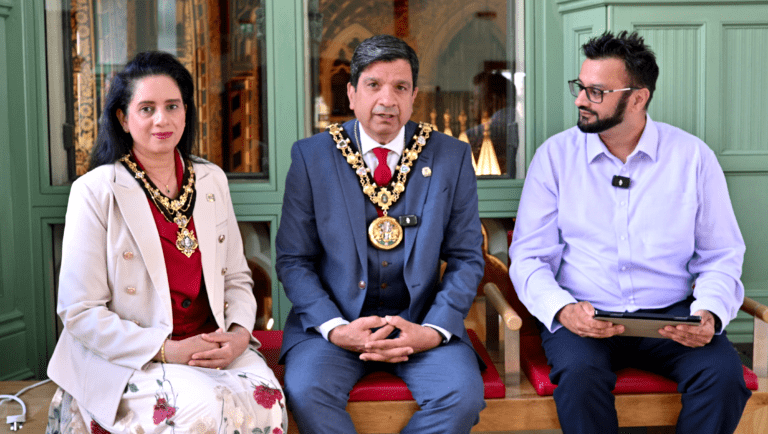
The conversation with Haji Numberdar Muhammad Pehlwan and Haji Mohammed Rasheed offers a heartfelt glimpse into the lives of the early Kashmiri and Pakistani immigrants who settled in the United Kingdom during the 1960s. Their memories reflect sacrifice, brotherhood, hard work, and deep love for their homeland and community.
Haji Numberdar Muhammad Pehlwan recalled arriving in the UK in March 1962 along with six or seven companions. Like many migrants of that generation, the journey was difficult. The weather was harsh, the living conditions were crowded, and life was unfamiliar. After arriving in London, they eventually settled in Dewsbury, where factory work became the foundation of their new lives.
Despite the hardships, he remembered those days with affection because of the unity among the community. Families and friends supported one another through every difficulty. It was common for many people to share a small house together without conflict. Respect, love, and hospitality were values everyone carried. The elders greeted each other warmly, visited the sick, and stood together during times of grief and happiness.
Muhammad Pehlwan spoke emotionally about how relationships were stronger in those days. Letters from Pakistan and Azad Kashmir carried deep affection, and people waited eagerly for news from loved ones. He reflected sadly that modern life has weakened some of those bonds, as many of the elders and close friends have now passed away.
He described the strong friendships within the Kashmiri diaspora in the UK. Weekends were filled with gatherings where elders sat together, shared stories, and remembered the villages they had left behind. People from different families and backgrounds treated one another like brothers and sisters. According to him, this sincerity and mutual support helped many migrants survive and succeed in a foreign country.
Haji Mohammed Rasheed then shared his own story. He arrived in the UK in April 1967 and worked in factories for many years. He explained that respect and honesty were central to working life at the time. Employers appreciated hardworking people, and workers took pride in earning through dedication and integrity.
Rasheed emphasized the importance of good character, kindness, and caring for others. He reflected on Islamic teachings about supporting the sick and speaking positively about those who pass away. He explained that visiting someone during illness or sharing comforting words could heal a person emotionally. According to him, manners and compassion are among the greatest qualities a human being can possess.
Much of the discussion focused on their hometown, Rajdhani, in Azad Kashmir. Both men spoke proudly about the educational progress made there over the years. They described how the area once had very limited access to schools, but through collective effort and donations from the community, educational institutions were established and expanded.
Haji Numberdar Muhammad Pehlwan explained that the Rajdhani school became one of the oldest and most respected schools in the region. He proudly spoke about the contributions of local families and overseas Kashmiris who donated generously to improve education, roads, and public facilities. He mentioned that many people contributed financially, while others gave their time and energy to support development projects.
The conversation highlighted how roads were built in remote areas through community cooperation. Before these roads existed, villagers had to walk long distances through difficult terrain. Elderly people, women, and children struggled greatly. The construction of roads transformed daily life and connected isolated villages to nearby towns and services.
The speakers also discussed the importance of preserving Kashmiri and Pahari identity among younger generations living in the UK. They expressed concern that language and culture could slowly disappear if children were not taught their heritage. They encouraged the creation of community centers and educational programs where young people could learn their mother tongue and cultural traditions.
Another major topic was the long-standing dream of a Mirpur airport. The speakers explained that many political leaders and community figures had campaigned for decades to establish an airport in Mirpur to serve the large Kashmiri diaspora living abroad. They described the political and logistical challenges involved, while also expressing hope that future generations may eventually see the dream fulfilled.
Throughout the interview, both men repeatedly returned to the values of humility, friendship, and service. They praised individuals in the community who worked selflessly for others and remembered old friends with deep affection. Their memories painted a picture of a generation that endured hardship with patience and built strong communities through unity and sacrifice.
The discussion concluded with gratitude for the opportunity to preserve these memories. Both men believed that sharing such stories is important for younger generations so they can understand the struggles, achievements, and values of those who came before them.