From Teaching in Azad Kashmir to Serving Central Ward in Rochdale – Councillor Waqar Ali Khan
The story of Councillor Waqar Ali Khan stretches between two places that share a deep connection: the village of Rajdhani in Azad Kashmir and the streets of Rochdale where he was born and raised.
Elected in May 2026 to represent Central ward in Rochdalefor the Workers Party, his journey is not a conventional political biography. It is a story shaped by childhood streets in Wardleworth, youth clubs that kept young people off the corner, elders who worked long factory shifts and built local institutions from scratch, years spent teaching in a rural girls’ school in Azad Kashmir, and a determination to remain on the doorstep for the residents he represents.
Throughout his life, one theme repeatedly comes to the surface: remembering the sacrifices of the generation before him, and using whatever position he holds to leave things better for the next.
A Rochdale Childhood Before Screens
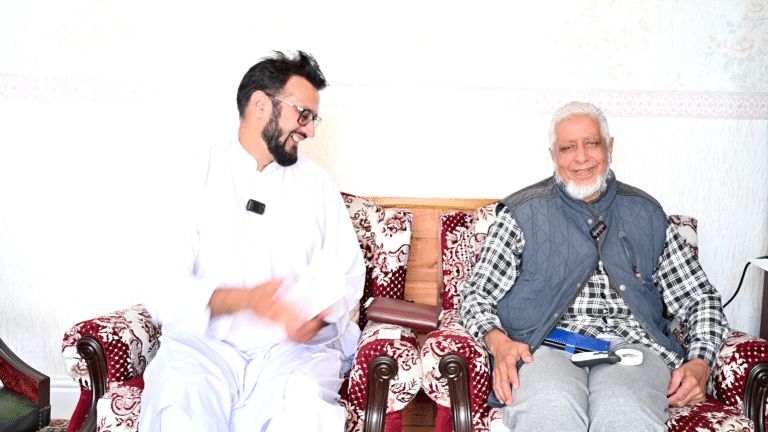
Waqar Ali Khan was born at Birch Hill Hospital and grew up in the Wardleworth and Ramsey areas of Rochdale, the youngest of nine brothers and sisters. His parents had come to Britain in the 1960s, part of the generation that arrived with very little and built new lives through hard work and mutual support.
Being the baby of the family meant watching older siblings move through school and adulthood while he grew up surrounded by neighbourhood friends in Central ward. Waqar attended Heybrook Primary School before moving on to Balderstone High School, experiencing a childhood that feels worlds away from life today.
There were no smartphones, no social media feeds, and no computers in every bedroom. Childhood meant heading outside with friends, playing football at the Red Garage or on the Heybrook pitch, playing cricket on the old astroturf, and making sure you were back through the front door before six o’clock when the streetlights came on.
Those streets also taught him the value of organised youth spaces. Waqar became chairman of Wardleworth Juniors, part of a wider network of local youth groups run by dedicated youth workers and community figures such as Haji Yasin, Saleem, Councillor Zaman, and Shiraz. At a time when young people in the area had few facilities of their own, those leaders used council and National Lottery support to give teenagers structure, sports, charity projects, residentials, and trips abroad—keeping young people away from drugs and antisocial behaviour while quietly preparing them to become leaders themselves.
Honouring the Generation That Paved the Way
Whenever Waqar speaks about his own path, he quickly turns the spotlight back onto the elders who came before him.
His father, Haji Muhammad Sarwar—now in his nineties—worked in the local cotton factories and at Arrow Mill after arriving in Britain, spending time in Leeds and Dewsbury before settling in Rochdale. Like many families of that era, life began in crowded shared accommodation where newcomers lived side by side, pooling what they had while Waqar’s mother cooked for everyone under one roof. Keeping in touch with relatives back home meant waiting weeks for letters or recording voice messages onto cassette tapes whenever someone travelled between Britain and Kashmir.
Alongside working and supporting family both in Rochdale and back home, his father threw himself into community life. He was involved with the Pakistan Welfare Association, helped collect funds in the early days of local mosques, and stood alongside pioneers such as Raja Zar Khan, who campaigned for free school meals and halal provision in schools when none existed. Those early efforts were not met without resistance; his father was even physically attacked while collecting charity funds for the mosque, yet never stepped back from serving the community.
For Waqar, preserving the names and stories of those unsung figures—men and women who laid the foundations of mosques, community groups, and everyday life in Rochdale—is vital. Today’s generation enjoys comforts and opportunities that only exist because earlier residents endured hardship without complaint.
Stepping Into the Classroom in Azad Kashmir
Although born and raised in Rochdale, Waqar’s connection to Azad Kashmir was never distant. As a young boy in Year 1 or Year 2, he spent three or four years living there with his parents while his grandparents were unwell, attending school locally and absorbing the language, culture, and rhythm of village life firsthand.
Years later, after completing his A-levels at Hopwood Hall College, earning a BA (Hons) in Business Management and Administration from the University of Central Lancashire, and completing his PGCE, family responsibilities drew him back again. Around 2013–14, he travelled to Pakistan to care for his ageing parents and family, expecting to stay for only a few months. Instead, circumstances meant remaining there for four to five years.
While looking after his family, he was approached by a local representative from Gulpur about a government girls’ school where Year 11 and Year 12 students were struggling badly with their exams. At first he went simply to see if he could help. That decision turned into three and a half years of full-time teaching.
Working in a school with scarce resources, Waqar refused to take a penny in pay. Instead, he spent hundreds of pounds a month out of his own pocket buying textbooks, stationery, and new drinking-water coolers for the students, while supporting fellow teachers however he could. By the time he left, his students were achieving a 95 per cent pass rate—and he left behind a fully documented year-long syllabus so the teachers who followed him could continue using the same structure.
Looking back, he regards those years as some of the richest of his life—not only because he was able to serve young students in a challenging environment, but because being there allowed him to spend precious final years alongside his grandmother, uncles, and close relatives before they passed away.
From the Shop Floor to the Council Chamber
Returning to Britain meant rebuilding a stable working life to support his family. Rather than continuing to chase scarce teaching posts, Waqar applied for a store assistant role at Aldi on Entwisle Road, just two minutes’ walk from his home on Brunswick Street. Within six months, he was promoted to senior manager, going on to run the store for seven years. During that time, he used his position to open doors for others—helping around fifty to sixty local young people with applications, references, and their first steps into employment.
Politics had always been close to home through his older brother, Ibrar Ali Khan, who had been elected as a young councillor in the mid-2000s and worked heavily on youth and community initiatives in the ward. As a teenager, Waqar had spent elections out on the streets with friends delivering leaflets for his brother’s campaign.
Over the following two decades, however, Waqar watched the area he grew up in decline, feeling that investment and opportunities for young people were slipping away. When he decided to stand in Central ward himself, it was driven by a desire to speak plainly for local residents—and by a strong personal conviction on international justice, particularly around Palestine, which drew him to the Workers Party.
In May 2026, voters in Central ward backed him with 1,944 votes—around 47 per cent of the poll—handing him a clear mandate from neighbours who had watched him grow up on the same streets.
An Office on the Streets
Now six months into his term, Waqar sits on scrutiny committees covering regeneration and the environment as well as health and schooling, questioning decisions and pushing for accountability on behalf of local people.
Yet he insists he does not see himself as a career politician, and rarely treats the role as a nine-to-five job. Alongside holding up to fourteen advice surgeries a month across different locations in the ward, he goes out street by street knocking on doors, posting live updates on social media so residents know where to find him, and even holding online Teams meetings with constituents when travelling abroad.
For Councillor Waqar Ali Khan, representation comes down to something simple: staying rooted in the community that raised him, honouring the elders who built it, and making sure the people of Central ward always have someone on their doorstep willing to listen and act.